Family Histories

       Home       NEW Updates      About Us       Feedback      Historic Sites       Consultants          Contact Us       Terms/Conditions


HAYWARD LILY   

Compiled by Gordon Freegard based on research by Merilyn Stewart

Matriarch and Role Model for Her People
Written by
Natasha Granath

Lily Hayward was 77 when she first celebrated a birthday. Though she had never failed to pull out the candles and buy gifts for each of her grandchildren, it wasn't until later in life that she conceded to the luxury of a celebration herself.
Her life was filled with irony and struggle. She learned to read at 65 after making every effort to instill a passion for learning and community spirit in her children. Despite facing frequent challenges, Mrs. Hayward possessed boundless energy and enthusiasm for life's endless tasks.

Her nine decades were marked by numerous chores and responsibilities. She raised 14 children, either in the bush or in the city, and had 220 direct descendants by the time of her death in July. Starting her life when there were few white settlers in her country, she earned high accolades from both Wadjalar and Nyoongar peoples.

Her children and grandchildren boast a wealth of achievements, from high-profile sports figures to a pastor and representatives on the Aboriginal and Torres Strait Islander Commission. Eight became teachers, some pursued academic paths and postgraduate studies, while others worked in Aboriginal affairs and politics, including one who served as a government ministerial adviser. One grandson heads the Aboriginal Legal Service, and another coordinates the Dumbartung Aboriginal Corporation's cultural artefacts center.


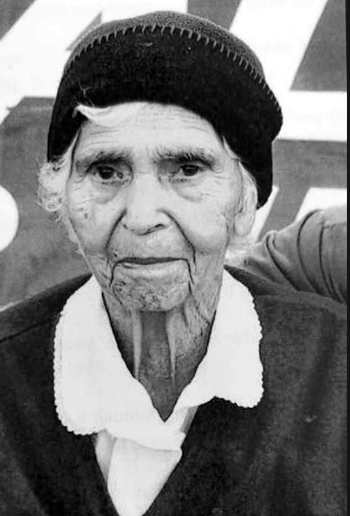
  LILY HAYWARD        #1
 

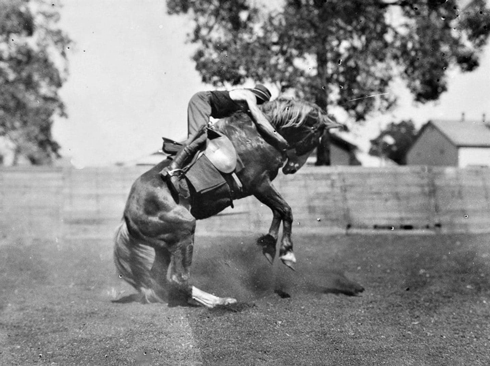
A REMOUNT HORSE LIKE THE ONES LILY USED TO BREAK IN    C1939            #2


Born in December 1914 near Manjimup, Lily grew up as part of the Kanang peoples, whose country spanned areas from Kojonup and Cranbrook to Manjimup and Bridgetown. Guided by her parents, Ruby (née Dalgatch) and Mowan Underwood, Lily was taught the ways of the bush, imbibing the values, stories, and customs of Aboriginal culture.
She learned to catch brumbies and hunt with a gun and traps, shooting animals for their skins as she and her people moved around their traditional country, occasionally doing domestic or clearing jobs for white settlers for extra income.
In the years following World War I, Western Australia's population swelled, largely due to migration from Britain, with many newcomers allocated land under the Group Settlement scheme. The Underwoods, like many Aboriginal families, had to adapt to new restrictions and were eventually forced out of their country, living on missions and reserves.
However, Lily's family found strength in their bonds with the Kanaeng peoples, including the Smiths, Punches, Krakouers, Eades, Coxes, Wallams, and Cuttabutts. Ruby and later Lily stood as beacons of resilience.
 

Lily and her siblings were raised in huts made from bark and blackboy, which their mother crafted to withstand the cold and wind of winter. It was near Tunney, halfway between Kojonup and Cranbrook, that Lily first met her husband, Eric Hayward, during a visit from his family.
Tragedy struck when she lost her sister Thelma and then her mother, delaying her reunion with Eric for several years. Taken in by the Krakouer family for two years, she eventually moved in with her aunt Lily on the Gnowangerup reserve, where her relationship with Eric flourished.

Brother Wright married Lily and Eric at Gnowangerup, which the couple used as a base for ten years. During this time, Mrs. Hayward gave birth to her first five children. However, in 1936, substantial change came when her husband and his brother Bill were selected to play for South Fremantle, leading the family to a daunting move to the city.
They camped at Bibra Lake and braved the chaotic noises of Fremantle Oval, gradually adjusting to urban life. After years of moving and living in tents, Lily and Eric took an old house in Broomehill to provide their children access to schooling, shops, and medical care.


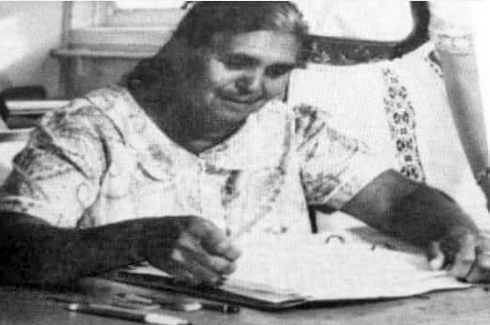
LILY HAYWARD AT  T.A.F.E. 1985      #3
 

Although she missed family members, Lily helped her family adapt to city life with support from her mother-in-law, Minnie Knapp. Many townspeople were impressed by her diligent and conscientious nature, which contributed to her children’s academic success.
Eventually becoming a great-grandmother of 133 and a great-great-grandmother of 12, she was regarded as a matriarch without being overtly dominant. In a quiet way, she encouraged her family to seize every opportunity and strive for their best.

Lily aspired to be a good citizen and eventually gained her citizenship rights, becoming widowed in 1990. She was recognized as a Senior Citizen of the Year finalist and received a NAIDOC Senior Citizen award in 2000, acknowledging her immense contributions to her people and country.

Always welcoming, her home was a haven for her 61 grandchildren, who returned from across WA, and she took great pride in their accomplishments. The girl who rode horses bareback through the bush and lived in a hut became a city trailblazer, enabling her descendants to carve a niche for Aboriginal people in 21st-century Australia.
In a quiet, calm manner, she encouraged her family to grasp the chances that came their way and do the best they could.

Sadly Lily passed away in Perth in July 2004


Every endeavour has been made to accurately record the details however if you would like to provide additional images and/or newer information we are pleased to update the details on this site. Please use CONTACT at the top of this page to email us. We appreciate your involvement in recording the history of our area.


References:                 Article:      Merilyn Stewart
                                                  Natasha Granath; The West Australian, 10/8/2004

                                  Image:   


Copyright : Gordon Freegard 2023 - 2026